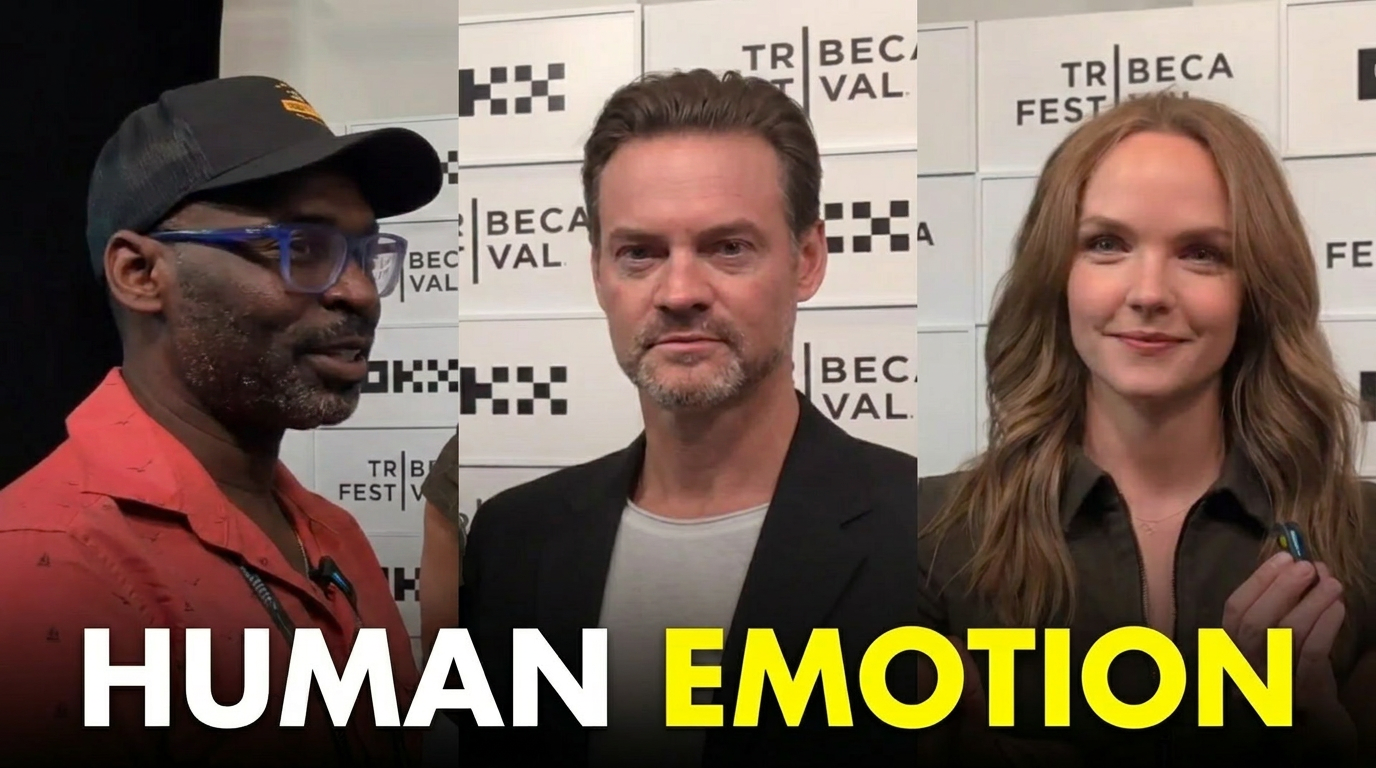










The 25th annual Tribeca Festival brought together filmmakers, actors, and storytellers from around the world, but some of the most fascinating conversations came from the questions their films raised.
During my coverage of Tribeca, I had the opportunity to speak with the creative teams behind several short films that explored a common theme: the evolving relationship between technology, identity, connection, and the human experience.
From virtual relationships and digital identities to grief, memory, sacrifice, and personal growth, these conversations revealed that the future is not just about the technology we create — it is about how we choose to use it and what we discover about ourselves along the way.
Exploring Digital Connection Through Verse
The short film Verse examines a world where online experiences can become just as meaningful — and complicated — as real-life relationships.
I spoke with actors Taj Cross and Jesse LaTourette, along with filmmakers Noam Argov and Sappir Argov, about the film’s exploration of virtual connection, loneliness, and the different versions of ourselves that we create online.
One of the biggest questions surrounding the film is how technology affects the way people connect with one another. As online spaces become more immersive, the line between digital and real-life relationships continues to evolve.
Jesse LaTourette reflected on how quickly technology has changed, sharing how the internet has transformed from simple online experiences into something that now influences how people interact, communicate, and build relationships.
The conversation also explored the idea that online spaces can serve different purposes. For some people, digital communities provide belonging, acceptance, and opportunities to connect with others who share similar experiences. For others, those same spaces can become a way to escape loneliness.
Noam and Sappir Argov discussed how Verse looks at the impact of online personas and the difference between who we are digitally and who we are offline.
The film asks an important question: As technology creates new ways to connect, are we strengthening human relationships or replacing them?
The Ethics of Memory and Loss in HOLO
While Verse focuses on digital relationships, HOLO explores a different emotional question: what happens when technology allows us to revisit the people and moments we have lost?
Director Alexander DeSouza explained that HOLO follows a woman who participates in an experimental therapy session where she encounters a virtual recreation of her deceased husband. The experience is designed to help her find closure for the things she never had the opportunity to say.
Although the concept may sound like artificial intelligence, DeSouza explained that the technology is not AI-based. Instead, the experience uses actors and motion capture technology to create an emotional recreation of someone who is no longer there.
The film raises difficult questions about ethics, privacy, and the limits of technology.
Would we want the ability to reconnect with someone we lost? And even if that technology existed, should we use it?
When discussing whether they would personally use such a service, actors Shane West and Morgan Kohan shared their own hesitation.
Kohan explained that while the idea is fascinating, there would be an emotional challenge in seeing another person portray someone you loved.
That question becomes the heart of HOLO: technology may be able to recreate an experience, but can it truly recreate the person and emotions behind it?
The Importance of the Journey in Imprint
Director Ran Jing’s Imprint shifts the conversation from technology to identity, sacrifice, and the choices that shape who we become.
The short film follows a surrogate story that also explores the immigrant experience, raising questions about what someone might sacrifice in pursuit of a better future.
During our conversation, Jing discussed the importance of the journey itself. The film examines whether achieving a desired result is always worth giving up the experiences that help shape us.
Using language as an example, Jing explained that while it might seem easier to instantly gain knowledge or skills, the process of learning creates connections, understanding, and personal growth.
That idea became one of the most powerful themes from the conversation: the process is often what defines us.
The experiences, struggles, relationships, and lessons we gain along the way become part of our identity.
Stories That Reflect Our Changing World
While these films explore very different stories, they share a common thread.
Verse examines how technology affects connection.
HOLO explores the boundaries of technology, grief, and memory.
Imprint reminds us that the journey we take is just as important as the destination we reach.
Together, these conversations from Tribeca Festival highlight the questions storytellers are asking about our future: How do we maintain human connection? How much of ourselves should exist digitally? And what experiences are too important to replace?
Film has always been a way to examine the world around us. These conversations prove that some of the most compelling stories are the ones that make us look inward.
Watch the full special bonus episode by clicking on the player above.