








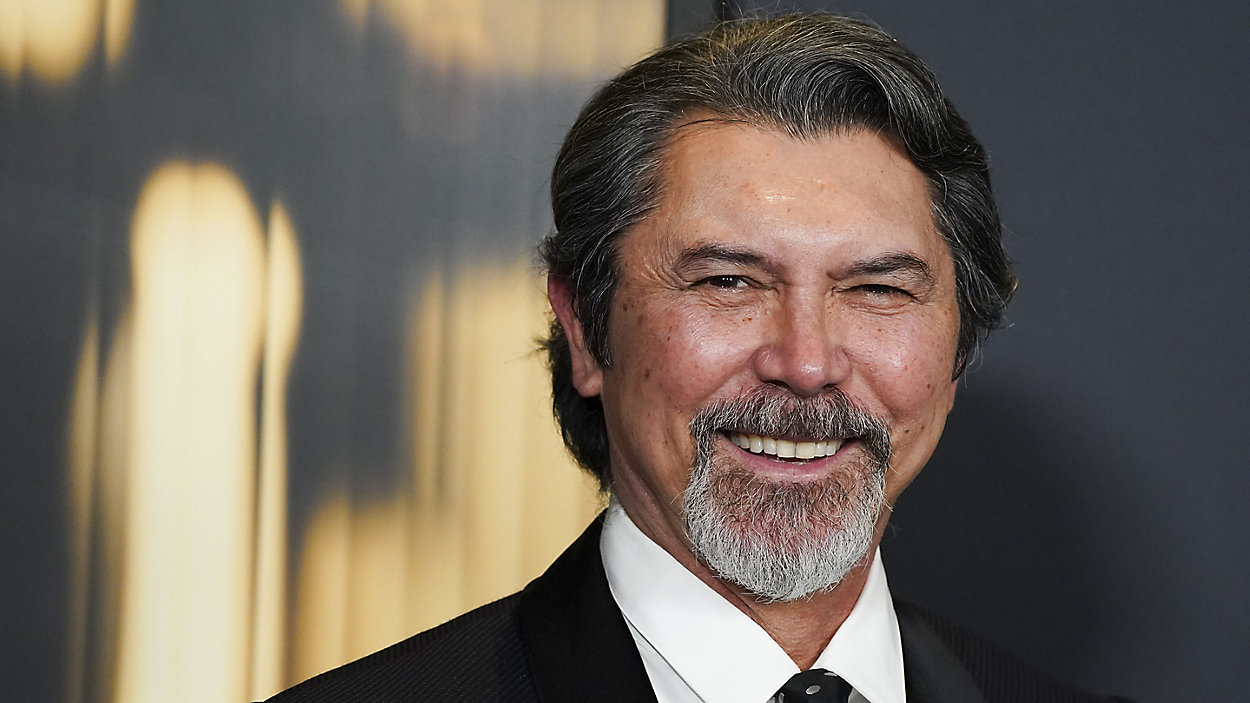
I had the pleasure of welcoming Lou Diamond Phillips to the show for the very first time, where we discussed his film Gangland, the complexities of his character Teddy, and the experiences that have shaped his nearly four decades in Hollywood.
Exploring the Complexities of Teddy in Gangland
One of the things I enjoy most about watching a film is discovering that a character isn’t necessarily who I initially believed them to be. That was certainly the case when I watched Gangland, where Lou portrays Teddy, a seasoned law enforcement officer working within the fictional Thunderstone Reservation.
When Teddy is first introduced, he comes across as hardened, cynical, and somewhat questionable in his approach to enforcing the law. There were moments when I genuinely wondered whether he was working against the very laws he was supposed to uphold. However, as the film progressed, I began to understand that there was a method to his madness. Teddy wasn’t simply trying to arrest people or maintain control. In many ways, he was trying to save members of a community that meant a great deal to him.
During our conversation, Lou explained why he was immediately attracted to the character and how Teddy’s complicated personality reflects the difficult balance between enforcing the law and understanding the people you’re supposed to protect. We also discussed the importance of tribal sovereignty, the jurisdictional challenges involving different law enforcement agencies, and the issues that continue to affect Indigenous communities.
What I found particularly interesting was Lou’s explanation of Teddy being an outsider himself. Although Teddy has married into the community and dedicated his life to protecting it, he isn’t Indigenous. That creates another emotional layer for a man who desperately wants to belong but continues to face resistance from the very people he serves.
The Guilt Behind Teddy’s Tough Exterior
As we continued discussing the film, I brought up something that had been on my mind while watching Teddy’s journey: guilt. Beneath his tough exterior, I sensed that Teddy was carrying something much heavier than the responsibilities of his job.
I asked Lou whether he believed Teddy felt guilty, and his response helped reinforce what I had been noticing throughout the film. Teddy is a man who struggles with the belief that he could have saved people but failed to recognize what was happening before it was too late. That guilt becomes an important part of his identity, influencing how he interacts with others and how he approaches his responsibilities.
We also explored Teddy’s relationship with Sandra, his new partner, and how she gradually begins to understand the man behind the reputation. I was especially interested in the moments when Teddy finally starts lowering his defenses and allowing someone to see the emotional burden he’s been carrying.
What makes this character so fascinating is that his toughness isn’t necessarily a reflection of strength alone. In some ways, it’s also a defense mechanism. Lou’s explanation of that emotional complexity gave me an even greater appreciation for the performance and the story being told.
Authenticity, Representation, and Real-World Issues
Another aspect of Gangland that I deeply respected was its commitment to exploring real-world issues without relying solely on entertainment or shock value. Throughout the film, we see themes involving gang violence, substance abuse, community trauma, and the challenges facing Indigenous populations.
Lou explained that the filmmakers intentionally created the fictional Thunderstone Reservation rather than identifying a specific tribe or state. The decision allowed the story to explore issues that affect numerous communities, including those beyond Indigenous reservations.
We also discussed the contributions of Marcus Red Thunder, who served as an executive producer and technical advisor on the film. Lou spoke about the importance of having someone with firsthand knowledge and experience helping guide the production toward a more authentic representation of the communities and issues being portrayed.
One of the things that surprised me during our conversation was learning about the experience levels of several younger Indigenous actors featured in the film. Their performances were incredibly impressive, and I never would have guessed that some had limited speaking-role experience before this project. Lou expressed how proud he was of the ensemble and the opportunities the film created for emerging performers.
Setting the Record Straight About La Bamba
Now, I couldn’t have Lou Diamond Phillips on the show without bringing up La Bamba! The 1987 film remains one of the most memorable projects of his career, and it was also one of the first films in which I remember seeing him.
While preparing for our conversation, I came across a story suggesting that Lou initially didn’t want to accept the role of Ritchie Valens. I found that surprising, and admittedly, part of me questioned whether it was actually true. His reaction was priceless.
Lou immediately laughed at the suggestion and made it very clear that he would have done practically anything to be part of the film. At that point in his career, he was still an unknown actor taking smaller roles and looking for opportunities to establish himself in Hollywood. The idea that he would have willingly turned down such a significant opportunity couldn’t have been further from the truth.
What made the exchange even better was that Lou went on to reveal details about the audition process, including the fact that he had auditioned for both Ritchie Valens and Bob Morales. He also discussed American Pachuco: The Legend of Luis Valdez, the PBS documentary celebrating the filmmaker and playwright responsible for La Bamba.
Learning When to Say Yes… and When to Say No
After discussing how much Lou wanted the opportunity to appear in La Bamba, I became curious about how his approach to accepting roles has changed over the years. When you’re first starting out, opportunities can be limited, and saying yes to a project can be an important step toward building a career. But what happens when you’ve spent nearly four decades working in the entertainment industry?
I asked Lou whether it had become easier for him to turn down projects, and his response was particularly interesting. He explained that saying no has never been easy, especially because of the work ethic instilled in him by his military upbringing.
However, he also emphasized the importance of connecting with the material, the character, and the people involved in a production. Whether he’s working on a drama, comedy, horror film, or something completely unexpected, he wants to find projects that challenge him creatively and offer something meaningful or entertaining.
We also discussed how his father’s Texas accent influenced Teddy’s voice in Gangland, giving the character another personal connection to Lou’s own experiences.
Lou Diamond Phillips as Foghorn Leghorn?!
While discussing his father’s voice and how it influenced Teddy’s accent, Lou brought up Foghorn Leghorn, the iconic rooster from Looney Tunes. And that’s when an idea popped into my head.
Why not have Lou Diamond Phillips play Foghorn Leghorn?!
I suggested that if the opportunity ever came along, he should absolutely accept it. Not only did Lou play along with the idea, but he also joked about portraying the character in a live-action production while wearing a chicken suit!
At that point, I was fully committed to the campaign. I even told him that if another Looney Tunes film were made, I would happily put his name forward for consideration. And if the role required him to wear a chicken suit, that would be included in the fine print!
Be sure to watch or listen to our complete conversation, available on Spotify, Apple Podcasts, YouTube, and other major podcast platforms!