









Opening credits can do more than tell you who made the show. At their best, they can transport you into another world before the story even begins.
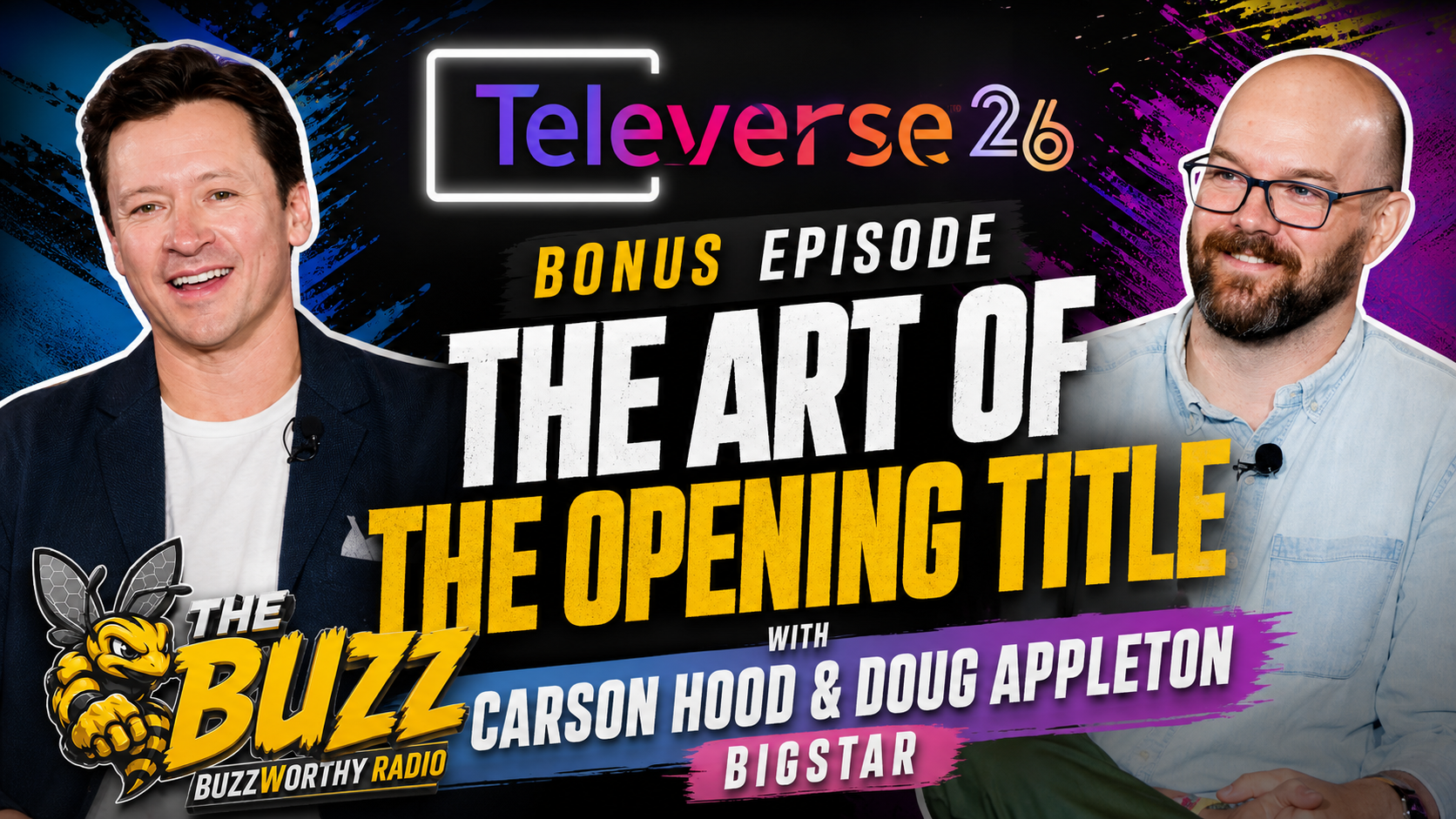
During Televerse, I caught up with BigStar EVP Carson Hood and Creative Director Doug Appleton to talk about the art behind opening titles, the importance of understanding a passionate fanbase and why nostalgia can be such a powerful creative tool.
Of course, Carson nearly ended our conversation before it started.
“Go Cowboys,” he said.
As an Eagles fan, there was only one appropriate response: “This interview’s done, guys.”
Thankfully, we recovered — and somehow, the football rivalry provided the perfect segue into the conversation.
Carson Hood: Capturing Attention — and Earning Trust
When I asked Hood how a title sequence attracts an audience’s attention, his answer was simple: do it “quick and fast.”
“You need to really wow an audience coming out of the gate,” Hood explained.
That challenge becomes even greater when working with an established property like Marvel, where generations of fans already have strong connections to its characters and stories.
“You can’t be a poser,” Hood said. “The fans know.”
That led us into a conversation about X-Men ’97 and the decision to embrace elements audiences remember from X-Men: The Animated Series, including its instantly recognizable theme.
For me, hearing that music again immediately brought back memories of watching the original series. Hood pointed out that this type of nostalgia can do something especially important when creatives are working with beloved intellectual property: earn the audience’s trust.
“When they see it, they’re immediately transported back to their bedroom or their living room,” Hood said.
We also discussed Professor Xavier’s appearance in Doctor Strange in the Multiverse of Madness. Before Sir Patrick Stewart’s Professor X is fully revealed, familiar notes associated with the animated X-Men theme can be heard.
For fans who grew up with that series, the connection was immediate.
Hood said moments like that demonstrate the delicate balance required when handling characters that mean so much to audiences. Respecting those connections can establish trust quickly — but maintaining that trust requires understanding the material.
Doug Appleton: Putting the Audience Into the World
My conversation with BigStar Creative Director Doug Appleton began with a slightly different creative dilemma: what exactly are you supposed to do with your hands when someone clips a microphone onto you?
After solving that mystery, we quickly discovered something else we had in common: a love of opening credits.
Appleton agreed that X-Men ’97 provides a great example of how important an established title sequence can become to a show’s identity.
“If you wanna have a show called X-Men ’97 that is a continuation, you can’t change that,” he said.
Our conversation returned to Professor X’s appearance in Doctor Strange in the Multiverse of Madness. Without that familiar musical connection, Appleton said seeing Sir Patrick Stewart would certainly still be exciting. But the music transforms the moment.
“It wouldn’t be, ‘It’s Professor X.’”
That distinction gets at something larger about title design and music: they can become part of how audiences identify a character, television series or film.
So what makes an opening sequence truly work?
“I think an opening sequence should really tell you what the show is about,” Appleton explained.
That doesn’t necessarily mean literally explaining the story. Instead, the sequence should establish a feeling and prepare viewers for the world they’re entering.
Appleton used Game of Thrones as an example. Someone might have been doing dishes or chasing their children around moments earlier, but once that unmistakable music begins and those visuals appear, the audience is transported.
“You’re immediately in the right mindset,” he said.
From Total Recall to James Bond
Naturally, once two people who love opening titles start talking about them, picking favorites becomes inevitable.
Appleton selected the original Total Recall title sequence as one of his favorites, pointing to the simplicity of its glowing red lettering and the way the sequence slowly draws the viewer in.
My choice took us into another iconic franchise: James Bond.
The Bond films demonstrate just how deeply a title sequence can become embedded into the identity of a franchise. The music, imagery and presentation aren’t simply credits preceding the movie. They’re part of the experience audiences expect.
As Appleton put it, you can’t really have a Bond movie without that signature title sequence.
Without it, “it would just be another action movie.”
And maybe that’s the best argument for why opening titles still matter.
Whether it’s the first notes of an X-Men theme transporting someone back to childhood, the Game of Thrones sequence preparing viewers to enter Westeros or a Bond opening signaling that another 007 adventure has officially begun, great title design does something much bigger than display names on a screen.
It tells us where we’re going.
And sometimes, before a character speaks a single word, it reminds us exactly why we wanted to return.
Watch the full interview with Carson Hood and Doug Appleton by clicking the player above.