








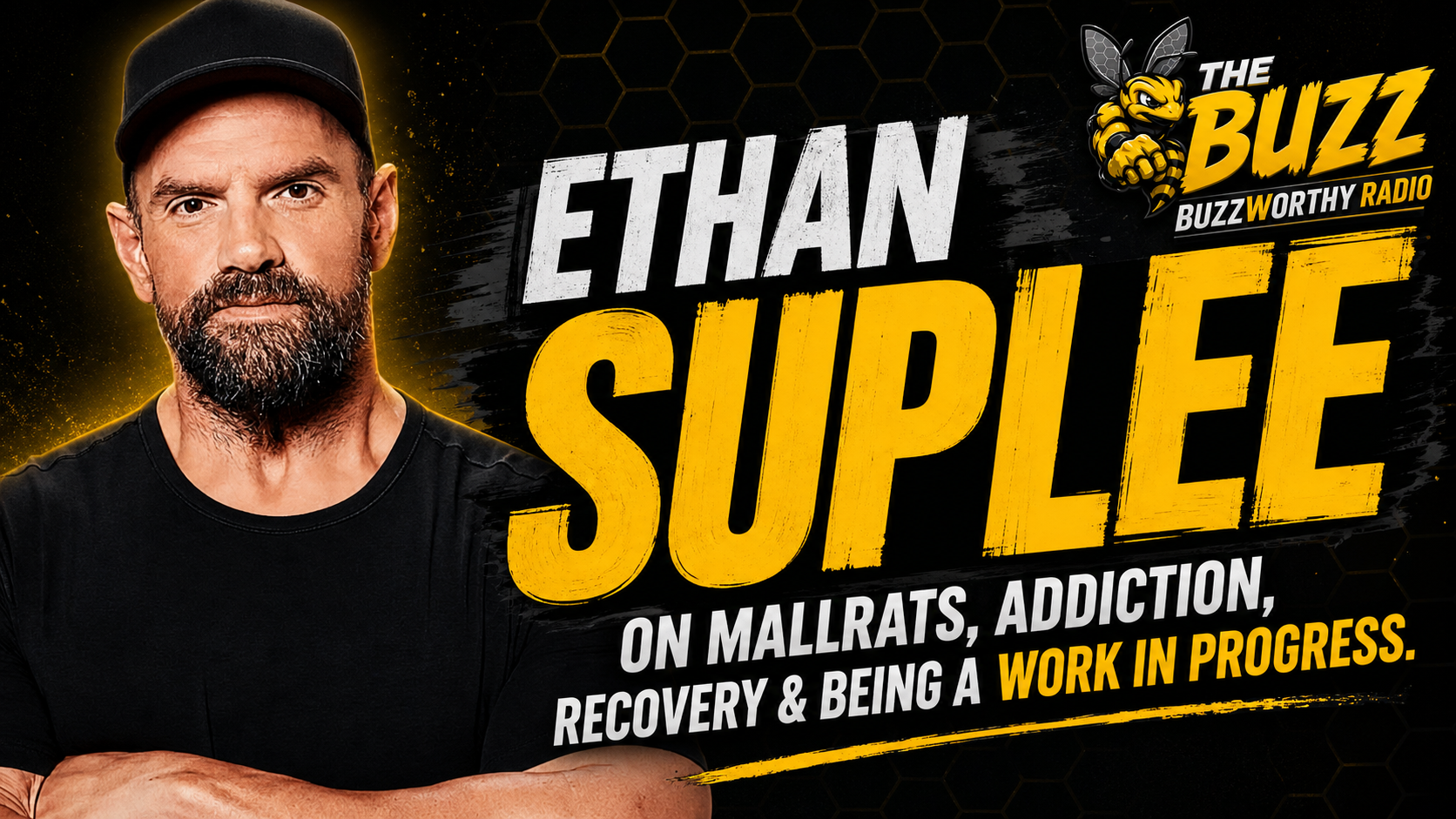
More than three decades after Mallrats first brought Ethan Suplee into the View Askewniverse, the actor is preparing to reunite with his fellow cast members. However, his latest conversation with me went far beyond nostalgia.
With the Mallrats reunion coming to Super Jersey Comic Expo in New Jersey, Suplee reflected on the strange passage of time, his enduring friendship with Kevin Smith and the cast, and why returning to a project that helped define so much of his career still feels almost surreal.
“I’m a grandfather,” Suplee told me, reflecting on the fact that Mallrats is now more than 30 years old. “A lot of these things started like Mallrats. I was a teenager when we did, but it feels like it was almost yesterday.”
That sense of familiarity extends to the View Askewniverse itself. Suplee described Smith’s filmmaking family as something that has continued to grow over the years while retaining a distinctly familial quality.
He also made it clear that when Smith calls, the answer is almost always going to be yes.
“There is nothing I would ever say no to him about,” Suplee said, describing Smith as compassionate, creative, funny, witty and wonderful.
But the Mallrats reunion was only the beginning of our conversation.
From the View Askewniverse to Lifelong
Suplee is also the host of Lifelong, a podcast where conversations frequently move into health, weight loss, addiction and recovery.
That led us to a recent episode featuring actor Tyler Labine, whose own story resonated with Suplee’s experiences. For Suplee, talking openly about these subjects isn’t about presenting himself as someone who has figured everything out. Quite the opposite.
He considers himself a work in progress.
Suplee has been sober since 2001, but he explained that recovery isn’t simply about abstaining from substances. There is also the deeper work of examining what he was trying to escape in the first place.
With food, that relationship became even more complicated because, unlike substances, food is something everyone needs.
“The cool thing about talking to Tyler,” Suplee said, “is he is, in effect, still a part of this View Askew universe.”
That connection created an unexpected bridge between his entertainment career and the more vulnerable conversations taking place on Lifelong.
Looking Beyond the Character
One of the most striking parts of our conversation came when we discussed how audiences perceived actors like Suplee and Labine earlier in their careers.
Characters who were funny or larger-bodied were often reduced to simplistic labels by audiences. Suplee’s willingness to discuss his own experiences creates an opportunity to reconsider those assumptions.
The person audiences see on screen is never the entire story.
Suplee has been increasingly open about his history with addiction and recovery, including experiences that he once might not have imagined discussing publicly.
That openness became particularly poignant when we talked about the death of his former Remember the Titans co-star Hayden Panettiere.
Suplee recalled their time together in Atlanta and described Panettiere as being like a little sister to him. Years later, seeing the news of her death brought those memories rushing back.
He also remembered the darkness he was experiencing in his own life at the time they last saw each other.
Rather than simply mourning someone he had known decades earlier, Suplee used the moment to talk about the devastating reality of addiction — and, importantly, the possibility of recovery.
“It is possible,” he said. “There is a path to get out of that.”
The Wake-Up Call That Took More Than One Moment
When I asked Suplee what ultimately became his turning point, his answer wasn’t a simple Hollywood redemption story.
There wasn’t one single moment that magically changed everything.
There were many warning signs. There were deaths. There were frightening experiences. There were moments when he genuinely didn’t expect to wake up the next day.
Even entering rehab wasn’t immediately the solution. He described leaving after detox and eventually finding himself back in a dangerous environment.
The real change came when he began confronting what he was trying to escape and the shame he carried with him.
Suplee described eventually reaching a place where he could recognize that he was worthy of a life in which he didn’t have to constantly beat himself up.
That idea became one of the most powerful moments of our conversation.
“We Are a Work in Progress”
Our conversation eventually became personal for me as well.
As someone who has spent years interviewing actors about their latest movies and television shows, I have always appreciated the moments when the conversation moves beyond promotion and into the person behind the project.
Suplee and I talked about self-doubt, the pressure to live up to other people’s expectations and the process of learning that your worth isn’t dependent on someone else’s approval.
For me, that has meant learning to stop worrying so much about what people think when I’m not in the room and recognizing that I don’t need someone else’s approval to feel good about myself.
Suplee reminded me that even those lessons don’t necessarily have a finish line.
“That’s something I’m still working on,” he said. “It’s a valuable lesson, but I think it’s also gonna be a work in progress for a while.”
That may be the most important takeaway from our conversation.
None of us has everything figured out.
Why These Conversations Matter
Suplee believes strongly in talking openly about these subjects because silence doesn’t help anyone.
The more people talk about addiction, recovery, mental health and their own struggles, the more it can encourage others to do the same.
For men in particular, there can be an additional stigma surrounding vulnerability. Talking about struggles can be incorrectly viewed as weakness.
Suplee’s approach is the opposite: vulnerability creates an opportunity for connection.
And when fans approach him, the conversations that mean the most aren’t necessarily about Mallrats, My Name Is Earl, Boy Meets World or American History X.
They’re the conversations about what someone else is going through.
“Honestly, conversation,” Suplee said when I asked what the best thing a fan has ever given him was.
When someone wants to talk about their own struggles with weight loss or substance use, that’s meaningful to him because he knows he’s still dealing with those issues himself.
“I don’t have everything figured out,” he said. “I’m a work in progress and I might learn something from you if you talk to me about that.”
That’s what made this interview different.
Suplee joins the Mallrats cast for the upcoming reunion at Super Jersey Comic Expo on August 29. He also hosts Lifelong, which records live Mondays at 7 p.m. Eastern and focuses primarily on health, weight loss, addiction and recovery.
Watch my full conversation with Ethan Suplee for an even deeper look at the man behind some of the most recognizable characters of his career, and the person who continues to work on himself long after the cameras stop rolling.