







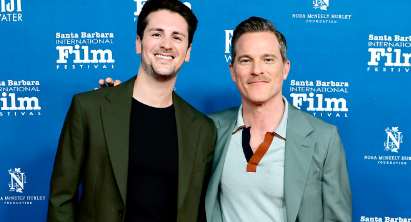
At the Santa Barbara International Film Festival, Bookends arrives as one of those rare films that sneaks up on you—funny, heartfelt, and quietly devastating in the best way.
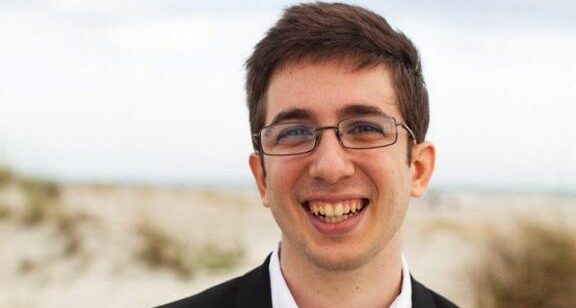
I had the chance to sit down with writer/actor Noam Ash and director Mike Doyle to talk about crafting Bookends, a coming-of-age story that unfolds when life knocks you flat and forces you to rebuild—sometimes under your grandparents’ roof.
The film centers on Nate, a struggling writer whose world collapses after a breakup sends him packing back home. What follows is a deeply human journey of reassessment: love, ambition, family, and what actually matters when everything you thought was solid suddenly isn’t.
A Coming-of-Age Story at Any Age
Ash describes Bookends as a reflection of life imitating art—both for Nate and the film itself. The project took roughly two and a half years to bring to life, moving at what Doyle perfectly described as “a snail’s pace… until it suddenly whizzes by.”
That slow burn shows on screen. Nate’s evolution doesn’t come from big, showy moments, but from uncomfortable realizations and unexpected connections—particularly with Dr. Greene, a character who initially feels abrasive but gradually reveals unexpected depth as Nate matures.
The Emotional Core (and That Hospital Scene)
One of the most powerful sequences in Bookends unfolds in the hospital, featuring Nate, his grandmother Miriam (played brilliantly by Caroline Aaron), and his grandfather, portrayed by the legendary F. Murray Abraham.
Ash and Doyle shared how those scenes demanded total trust—between actors, director, and story. Doyle emphasized creating a safe space for actors to take emotional risks, while Ash described the day as one of full surrender, supported by a cast that felt more like family than coworkers.
It’s raw. It’s earned. And it’s the emotional backbone of the film.
Let’s Talk About That Ending (No Spoilers… Mostly 😏)
Yes—I admitted I was mad. And yes—we talked it out.
Rather than tying everything up neatly, Bookends leans into ambiguity. Ash explained that the ending was intentionally designed to feel like a beginning, not a conclusion—an idea rooted in Jewish storytelling traditions where life is a continuum, not a closed chapter.
By the end, Nate isn’t “fixed.” He’s ready. And sometimes, that’s the most honest ending of all.
Why Bookends Belongs at SBIFF
There’s something special about watching a film like this with a festival audience. Bookends thrives on shared laughter, collective silence, and those moments where you feel the entire room leaning in together.
Funny, thoughtful, and emotionally grounded, this is a film that stays with you long after the screen cuts to black—even if it does leave you yelling at it just a little bit.
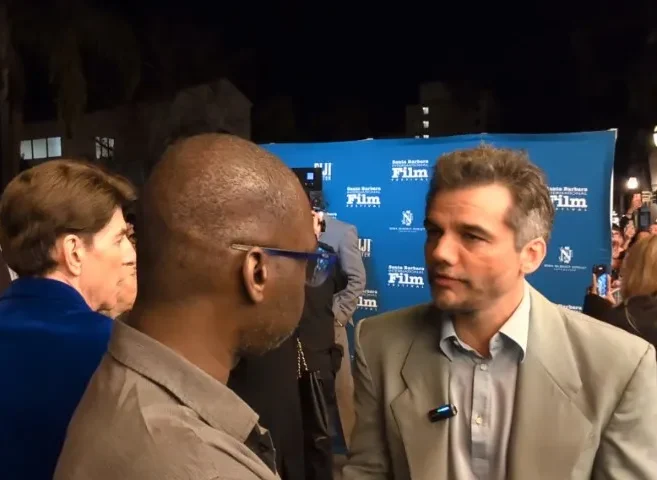
Watch the full interview with Noam and Mike above. We also have another interview with the two, plus Charlie Barnett, from the red carpet at SBIFF dropping later this week.
Stay tuned…