










I’ve seen a lot of conversation lately around podcast awards — the iHeart Podcast Awards, the Signal Awards, the Ambies — and one phrase keeps resurfacing: “It feels like a money grab.”
I understand where that skepticism comes from. Submission fees, trophy costs, unclear judging processes — these are fair questions, especially for independent podcasters who are funding their work out of pocket. A recent New York Times article explored many of these concerns, and none of them should be dismissed outright. Transparency matters.
But here’s where I think the disconnect happens.
Podcast awards are often misunderstood as transactions, when in reality they function more like positioning tools.
Submitting your podcast is not about buying validation. It’s about placing your work in front of people who work inside the industry — judges, producers, publicists, executives, and creatives whose job it is to evaluate content. That visibility exists whether you win, get nominated, or simply get reviewed.
I don’t submit expecting to win. I submit expecting my work to be seen.
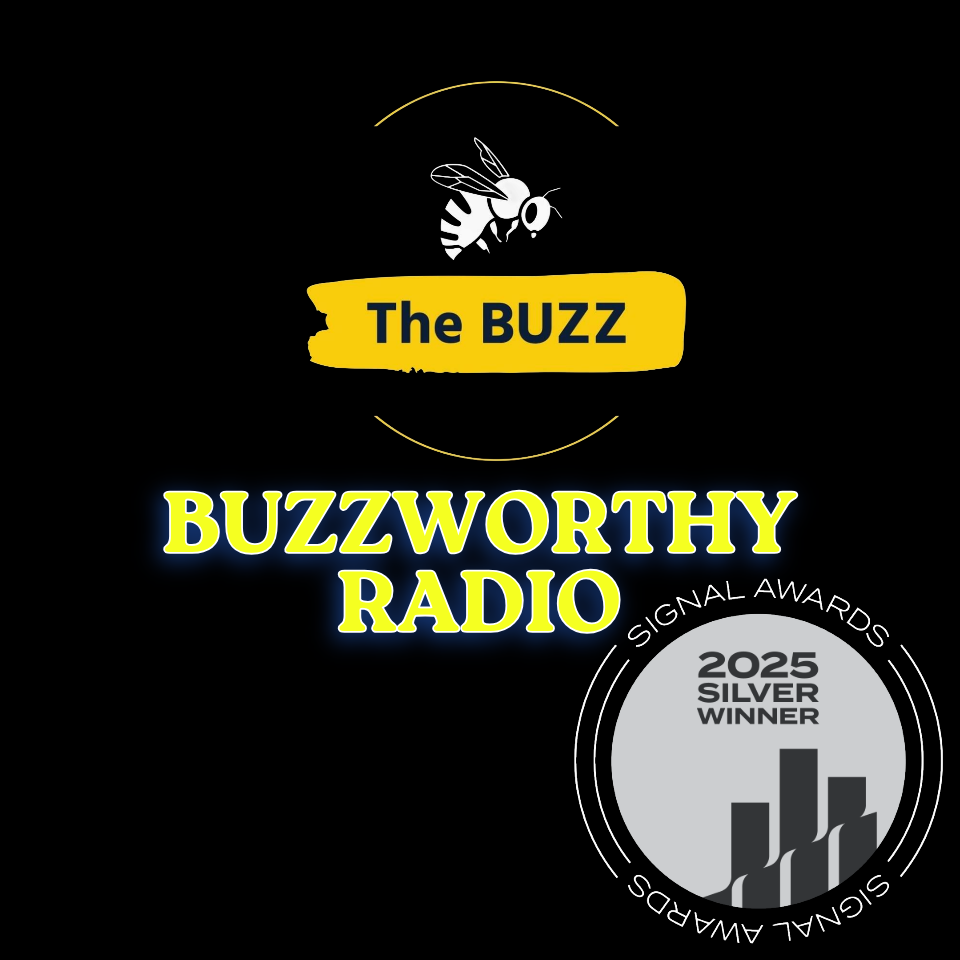
The Buzz – BuzzWorthy Radio is a two-time award-winning show. Those wins didn’t suddenly change everything, but they did something just as important: they confirmed that the work stands on its own, independent of follower counts, algorithms, or platform noise. Awards didn’t make the show credible — they reflected credibility that was already there.
That realization didn’t come overnight. For a long time, my own imposter syndrome showed up when I compared numbers. Seeing other podcasts with 10,000-plus followers on Instagram or massive followings on X made it easy to feel like I didn’t belong in the same awards conversation. But that belief quietly fell apart the moment the work was evaluated without those numbers attached — and recognized.
When I accepted one of my awards, I said something that still grounds me:
“It’s not about being the loudest voice in the room, but being the most impactful voice in the room.”
Social media rewards loudness. The industry rewards impact. Those are not the same thing.
Seeing independent podcasts win at major awards ceremonies reinforced that truth for me. Watching Jump with Traveling Jackie win Best Travel Podcast at the iHeart Podcast Awards was a turning point. It made something very clear: independent shows weren’t just being allowed into the room — they were being celebrated. That moment reminded me that submitting wasn’t pretending I belonged. It was acknowledging that I already did.
That’s why I submit.
Not because I expect a trophy. Not because I assume a nomination. But because I believe the work deserves to be reviewed by people who understand the craft. If nothing else comes from it, the work still moves through the industry — and that matters.
I once answered a friend who asked if I thought I had a shot at being nominated by saying: “I know I don’t have a shot if I don’t submit at all.” I stand by that.
Submitting is the first step. Everything after that is extra.
Awards aren’t mandatory. They’re optional tools. And like any tool, their value depends on how you use them. Dismissing them outright often says more about expectations than ethics.
For me, submitting is about advocacy — for my work, my voice, and the space independent creators deserve to occupy. Not as the loudest voices in the room, but as impactful ones.